Architectural & Specification Highlights
- Naturally porous vesicular cellular matrix dissipates solar thermal energy, remaining comfortable underfoot.
- Striking charcoal-to-black aesthetic delivers intense visual contrast with pool water and greenery.
- Highly resistant to weathering, salt spray, ultraviolet exposure, and acidic rain environments.
- Exceptional versatility spanning pool copings, ventilated rainscreen facades, and water features.
Genesis Along Indonesia’s Volcanic Ridges
Indonesian Black Lava stone—locally referred to as *Batu Candi*—is an extrusive volcanic basalt formed from ancient cooling lava flows around Central Java’s volcanic highlands. As volatile volcanic gases escaped during rapid cooling, they formed a unique vesicular network of micro-cellular air pockets.
This volcanic genesis creates a stone that possesses the structural integrity of dense basalt combined with lightweight thermal dissipation characteristics unmatched by traditional quarry stones.
Thermal Dissipation & Barefoot Pool Decks
Dark-colored stones are frequently avoided in outdoor landscaping due to fears of intense solar heat absorption. However, Black Lava stone defies this assumption through its cellular physics.
The micro-cellular porous structure traps air pockets that act as a natural thermal buffer. Rather than storing and radiating intense surface heat like dense granite or ceramic, Black Lava rapidly dissipates thermal energy, keeping pool deck copings remarkably comfortable for barefoot resort guests even under intense midday sun.
“Black Lava’s cellular porosity creates an organic thermal buffer, disproving the myth that dark stones cannot be walked on barefoot.”
— Zeofa Material Architecture
Visual Contrast in Tropical Modernism
Contemporary architects prize Black Lava stone for its dramatic chromatic dialogue. When dry, it exhibits a sophisticated architectural charcoal hue; when wet, it transforms into a deep obsidian black.
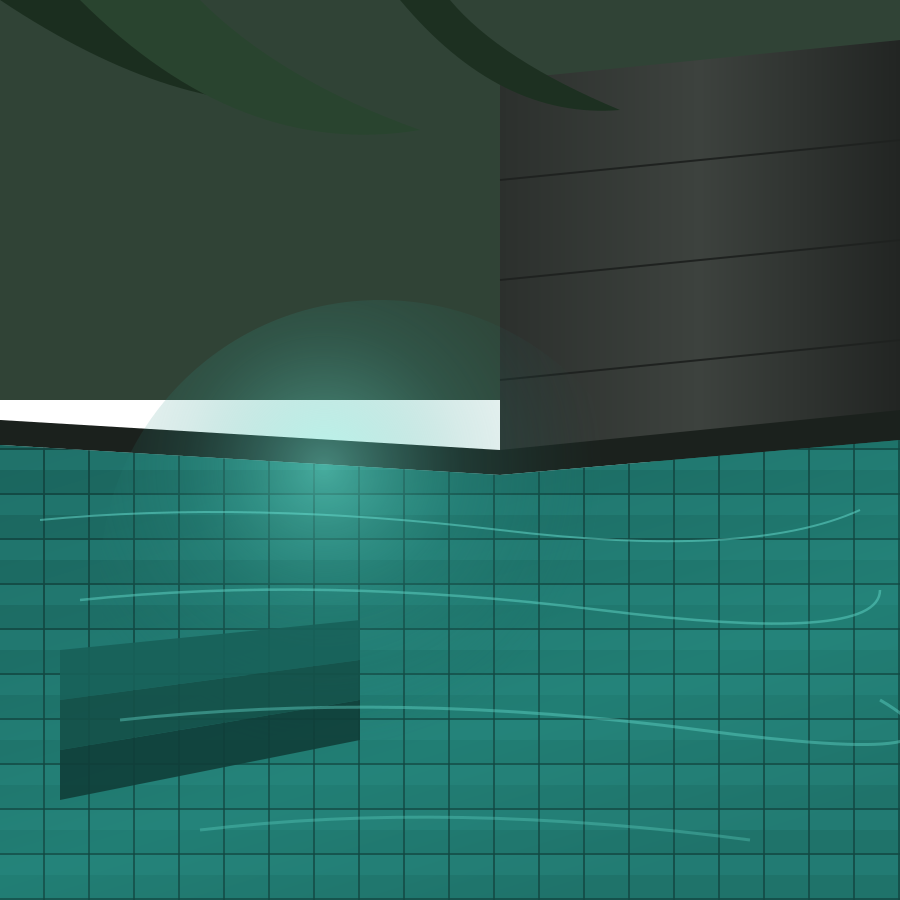
This textural depth creates striking contrasts against vibrant tropical foliage, warm teak woodwork, and the turquoise waters of Sukabumi green stone swimming pools, establishing it as a cornerstone of modern biophilic architecture.
- Dramatic framing around infinity pool perimeters and wet-deck transitions
- Textured, non-reflective interior feature walls and fireplace surrounds
- Exterior rainscreen facade cladding with superior acoustic insulation
- Carved stone water feature bowls and cascading spillways
Preservation & Sealing Recommendations
While Black Lava stone is naturally resilient to weather and ultraviolet breakdown, exterior installations benefit from breathable penetrating sealers (silane/siloxane impregnators).
These impregnating sealers penetrate into the stone’s micro-pores to prevent oil and organic leaf staining while leaving the stone’s breathable vapor properties and natural matte surface finish entirely intact.
Technical Sourcing & Material Profile
Verified quarry laboratory standards and export specifications:
| Stone Variety | Volcanic Basalt (Candi Lava Stone) |
|---|---|
| Quarry Origin | Mount Merapi Volcanic Slopes, Central Java, Indonesia |
| Color Profile | Deep Charcoal Grey to Volcanic Black (Darker when wet) |
| Structure | Vesicular Micro-Porous Volcanic Igneous |
| Standard Finishes | Sawn Cut, Honed, Flamed, Bush Hammered |